Warm-up sets prepare you. Working sets build you. Only one of them counts toward your training volume. A 2017 meta-analysis in the Journal of Sports Sciences found a clear dose-response relationship between the number of hard working sets and muscle growth (Schoenfeld et al., 2017). Yet many lifters inflate their volume by counting every set they perform, warm-ups included. That muddies the data and hides stalled progress.
This guide breaks down what separates a warm-up set from a working set, how many warm-up sets you actually need, and why the distinction matters for long-term results. If you're still unclear on the basics, start with our guide to sets and reps.
Key Takeaways
- Warm-up sets prime muscles and joints; only working sets count toward training volume.
- Most heavy compound lifts need 2-4 warm-up sets ramping up to working weight.
- Training volume drives hypertrophy: 10-20 working sets per muscle per week is the research-backed range (Schoenfeld et al., 2017).
- Tracking volume accurately requires separating warm-ups from working sets in your log.
What Is a Warm-Up Set?
A warm-up set is a lighter-load set performed before your working weight to prepare muscles, joints, and your nervous system for heavy effort. A systematic review in the Journal of Science and Medicine in Sport found that warming up reduced injury risk in the majority of trials reviewed (Fradkin et al., 2006). Warm-up sets are essential, but they don't build muscle.
Warm-up sets serve three purposes. First, they increase muscle temperature, which improves contractile function and reduces stiffness. Second, they let you groove the movement pattern with light loads before adding serious weight. Third, they ramp up nervous system activation so your motor units fire more efficiently when heavy sets begin.
You'll typically use 40-70% of your working weight during warm-ups. Reps stay moderate, usually 5-10 per set. Rest periods are short, around 60-90 seconds. The goal isn't fatigue. It's readiness.
What Is a Working Set?
A working set is performed at your target load, taken close to your planned effort level, and counted toward your training volume. Krieger's 2010 meta-analysis found that multiple working sets produced roughly 40% greater hypertrophy compared to single-set protocols (Krieger, 2010). These are the sets that actually drive adaptation.
Working sets challenge your muscles enough to trigger growth or strength gains. Most evidence-based programs prescribe them at an intensity where you finish with 1-4 reps left in the tank, a concept called reps in reserve (RIR). If you're squatting 100 kg for sets of 5 and could maybe grind out 7 or 8 reps, that's a working set.
The test is straightforward: if a set doesn't push you near your capacity, it's a warm-up. If it does, it's a working set. Your training log should only count the latter when tallying weekly sets per muscle group.
Why Does the Distinction Matter for Volume Tracking?
Training volume, typically measured as the number of hard sets per muscle group per week, is the primary driver of hypertrophy. A dose-response meta-analysis supports 10-20 working sets per muscle group per week for most trained individuals (Schoenfeld et al., Journal of Sports Sciences, 2017). Mixing warm-ups into that count inflates your numbers and hides the truth about your training.
Here's how the math goes wrong. Say you count three warm-up sets plus three working sets as "six sets of squats." You'll think your quad volume is healthy when you're really only doing three effective sets. That gap compounds across a training week.
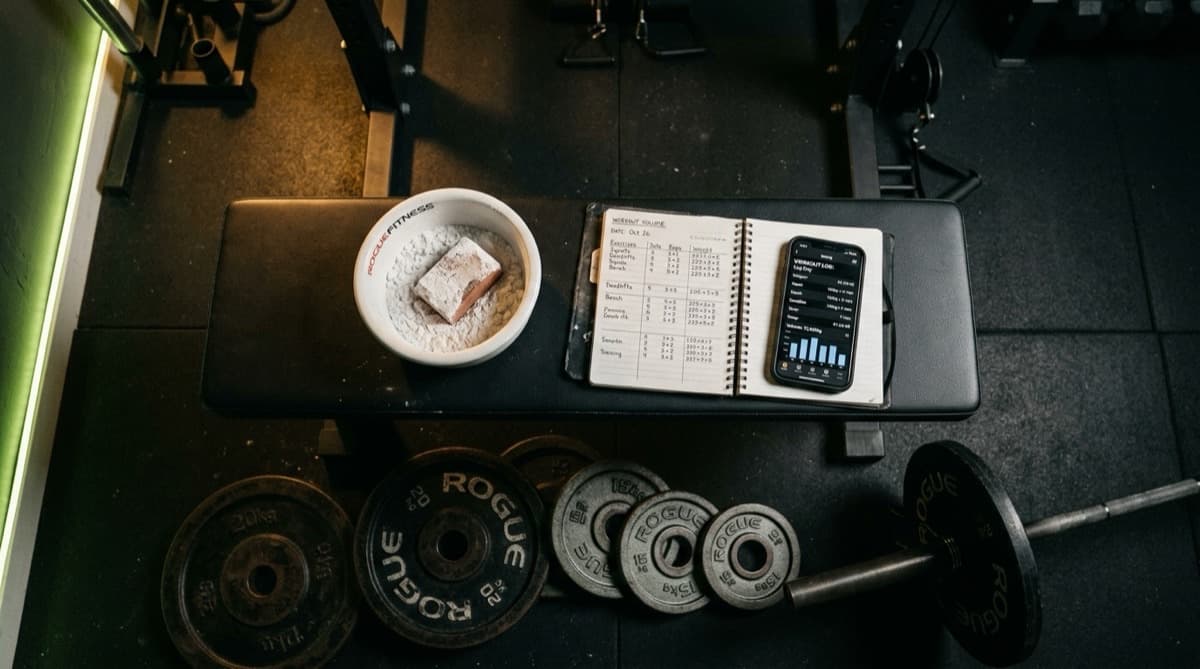
BeatLast separates warm-up sets from working sets in the tracking interface so your volume numbers stay clean and reflect the work that actually matters.
Accurate tracking also helps you manage fatigue. If warm-ups inflate your set count, you might believe you're at 16 weekly sets per muscle when you're actually at 10. Then you wonder why progress has stalled. Sound familiar?
How Should You Structure Your Warm-Up Sets?
The ramp-up method is the most widely recommended approach. The NSCA's Essentials of Strength Training and Conditioning recommends starting with a light load and progressively increasing weight across 2-4 sets until you reach your working weight (Haff & Triplett, Essentials of Strength Training and Conditioning, 4th ed., 2016). This gradual climb prepares your body without draining energy.
The principle is simple: start light, increase weight each set, and decrease reps as you get heavier. Your last warm-up set should land at roughly 80-90% of your first working set's weight. Rest 60-90 seconds between warm-up sets, much shorter than the 2-3 minutes you'd take between heavy working sets.
Most intermediate lifters overcomplicate their warm-ups. The practical rule is: the heavier your working weight, the more ramp-up sets you need. A 60 kg bench press might need one warm-up set. A 180 kg deadlift needs four.
How Many Warm-Up Sets Do You Need?
The answer depends on the exercise and where it falls in your workout. A study in the Journal of Strength and Conditioning Research found that the intensity and duration of the warm-up measurably affected subsequent 1RM performance — too little preparation and too much both cost top-end strength (Barroso et al., 2013). Heavier lifts simply demand more preparation.
Heavy Compound Lifts (Squat, Bench, Deadlift)
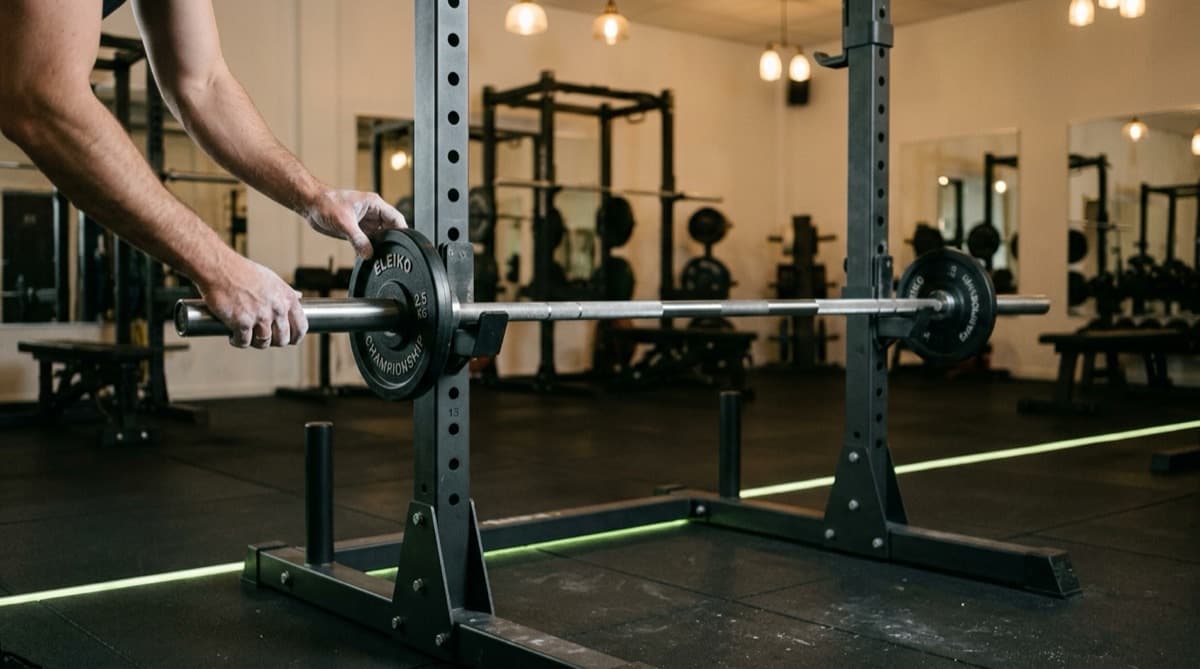
Three to four warm-up sets, starting from an empty bar or a very light load. These movements load the most tissue and require the most neural coordination.
Moderate Compound Lifts (Rows, Overhead Press, Lunges)
One to two warm-up sets, especially if the muscle group is already warm from a prior exercise in the session.
Isolation Exercises (Curls, Lateral Raises, Leg Extensions)
Zero to one warm-up set. The loads are lighter, the joints are warm, and one easy set is enough to find the groove.
A common mistake is applying the same warm-up template to every exercise. But if you've already done four heavy sets of barbell rows, your biceps don't need three warm-up sets before curls. Context matters more than rigid protocols.
What Are the Most Common Warm-Up Mistakes?
Skipping warm-ups entirely is the obvious blunder, but it's not the most frequent one. Stewart and Sleivert (1998) found that an active warm-up at moderate intensity improved subsequent anaerobic performance (Stewart & Sleivert, Journal of Orthopaedic & Sports Physical Therapy, 1998). The subtler mistakes drain energy or distort your training data.
Counting Warm-Ups as Working Volume
This is the biggest tracking error. Writing "5 sets of bench press" when two of those were at 50% gives you a false picture of your training stimulus. Be honest with your log.
Making Warm-Up Sets Too Heavy
If your warm-up set feels like a grind, it's too heavy. You should finish every warm-up feeling ready for more, not fatigued. A warm-up at 90-95% of your working weight is just a poorly planned working set.
Skipping Warm-Ups Entirely
Jumping straight to heavy weight increases injury risk and reduces performance. Even when you're short on time, one or two quick ramp-up sets are worth the three minutes they take.
Sample Warm-Up for a 100 kg Squat
Putting the ramp-up method into practice makes the concept concrete. Research confirms that a well-structured active warm-up improves subsequent strength and power performance (Bishop, Sports Medicine, 2003). Here's exactly how a warm-up looks for working sets at 100 kg.
| Set | Weight | Reps | Purpose | Rest |
|---|---|---|---|---|
| Warm-up 1 | 20 kg (empty bar) | 10 | Blood flow, groove the pattern | 60 s |
| Warm-up 2 | 50 kg | 5 | Build toward working load | 60 s |
| Warm-up 3 | 70 kg | 3 | Moderate-weight preparation | 90 s |
| Warm-up 4 | 85 kg | 2 | Final nervous system primer | 90 s |
| Working set 1 | 100 kg | 5 | First productive set | 2-3 min |
| Working set 2 | 100 kg | 5 | Second productive set | 2-3 min |
| Working set 3 | 100 kg | 5 | Third productive set | Done |
Notice the pattern. Reps decrease as weight increases. The warm-up sets total 20 reps across four sets, falling within the 10-25 rep range that most coaches recommend for pre-lift preparation. The jump from 85 kg to 100 kg is only 15 kg, keeping the transition smooth.
Total time for warm-ups: roughly five minutes. That's a small investment for safer, stronger working sets.
Bishop's 2003 review in Sports Medicine concluded that active warm-ups improve short-term performance when they're intense enough to elevate muscle temperature but not so demanding that they cause fatigue (Bishop, 2003).
The bottom line
Warm-up sets and working sets have different jobs. Warm-ups raise your temperature, prime your nervous system, and let you rehearse the movement. Working sets deliver the training stimulus that builds muscle and strength. Only working sets belong in your volume count.
Keep your warm-ups efficient: 2-4 sets for heavy compounds, 0-1 for isolation work. Ramp from light to near-working weight. Rest briefly. Then attack your working sets with full focus.
Getting this distinction right means your training log reflects reality. When you know your true volume, you can make smarter decisions about when to add sets, when to push harder, and when to back off. That's how progress stays consistent over months and years.
Frequently asked questions
- Do warm-up sets count toward my total training volume?
- No. Only working sets, sets performed at your target load and taken close to your effort ceiling, count toward weekly volume. Warm-up sets prepare your body but are too light to drive muscle or strength gains.
- How many warm-up sets should I do before a heavy lift?
- Most lifters need 2-4 warm-up sets before their first heavy exercise, ramping from an empty bar or light weight up to about 80-90 percent of their working weight. Lighter accessory exercises usually need just 1 warm-up set or none.
- Should I warm up for every exercise in my workout?
- Not necessarily. You need proper warm-ups for the first exercise and any new movement pattern. If you move from bench press to overhead press, one light ramp-up set is usually enough since your shoulders are already warm.