A rep is one full movement; a set is a group of reps done back to back before you rest. The number you pick for each mostly changes the emphasis, not the whole result. Lower reps with heavier weight lean toward strength; moderate reps build muscle well; higher reps build endurance and still grow muscle if you push them hard. The internet makes this far more complicated than it is.
What's the difference between reps and sets?
A rep, short for repetition, is a single complete lift: one squat down and up, one press from chest to lockout. A set is a run of those reps performed together, like 8 reps in a row. When you see "3×8" it means three sets of eight reps, with rest in between.
Two more terms matter. Load is how much weight is on the bar. Volume is roughly sets multiplied by reps multiplied by weight, and it's the number that best tracks how much work you did. Progress usually means volume creeping up over time, which is the heart of progressive overload.
One more idea sits underneath all of this: intensity. In lifting, intensity means how heavy the weight is relative to your one-rep max, not how sweaty you feel. A set of 3 at 90% of your max is high intensity; a set of 20 at 50% is low intensity. Rep ranges are really just a shorthand for intensity zones, which is why the numbers below aren't magic. They're rough labels for how hard each rep is.
How many reps for strength?
For maximal strength, most lifters train in roughly the 1–5 rep range with heavier loads and longer rests. Low reps let you handle weights close to your limit, which teaches your nervous system to produce force. This is why classic strength templates like 5×5 sit at the low end of the range.
Heavy, low-rep work costs more recovery per set, so you rest longer between them, often three to five minutes. You also can't do it for every lift every day without digging a hole. Strength blocks tend to keep a couple of lifts heavy while the rest stay moderate, which ties directly into how you manage stalls and fatigue.
The research backs this up. A 2017 meta-analysis by Schoenfeld and colleagues found that low-load and high-load training produced similar muscle growth, but heavier loads were clearly better for maximal strength (Schoenfeld et al., 2017). If a strong squat is your goal, you have to spend real time near your limit. There's no shortcut around lifting heavy things.
A simple low-rep scheme looks like this: pick a big lift, do 4 or 5 sets of 3 to 5 reps, and stop each set with a rep or two still in the tank. When all your sets hit the top of the range with clean form, add a small amount of weight next session and start the climb again.
How many reps for muscle?
For building muscle, the moderate range of roughly 6–12 reps is the reliable default. It balances enough load to challenge the muscle with enough reps to rack up volume, and it's comfortable to recover from. The bulk of most physique-focused training lives here for good reason.
The useful nuance: muscle growth is fairly forgiving of rep range as long as you take sets close to failure. Sets of 5 and sets of 20 can both build muscle. What matters more is total hard volume over a week and steady progress on it. The 6–12 window just happens to be the most practical place to accumulate that volume.
This isn't just gym-bro lore. A 2016 study by Morton and colleagues had trained men lift either heavy (8–12 rep max) or light (20–25 rep max) loads to failure for 12 weeks, and both groups gained the same amount of muscle (Morton et al., 2016). The catch is the phrase "to failure." Light loads only work if you actually push the sets hard. That's why the moderate range is popular: it lets you reach a challenging effort without doing 25 grinding reps every set.
Volume is the real driver here, and more of it tends to mean more growth up to a point. A dose-response review by Schoenfeld, Ogborn and Krieger found muscle gains rose with weekly sets, with 10-plus hard sets per muscle beating lower amounts (Schoenfeld et al., 2017). Rep range decides how it feels; weekly volume decides how much you grow.
What about higher reps and endurance?
Reps above roughly 15 build muscular endurance, the ability to keep producing force over many reps. They still grow muscle when taken close to failure, so high-rep work isn't wasted for size. It just becomes very taxing on your lungs and grip before the target muscle is done.
High reps shine on isolation and machine work where technique and safety hold up when you're fatigued. Think leg extensions, lateral raises, or cable movements. They're a poor fit for heavy barbell lifts, where a breakdown in form under fatigue carries more risk than reward.
There's also a practical ceiling. A study by Lasevicius and colleagues comparing training intensities at equated volume found that both low and high loads build muscle, but heavier loads were the more efficient path (Lasevicius et al., 2018). Twenty-rep sets are a fine tool, but doing all your training that way is a slog. Use high reps where they're safe and pleasant, not as your whole plan.
How many sets should you do?
Sets are how you dial total volume. A common starting point is 3 to 4 working sets per exercise, and somewhere around 10 to 20 hard sets per muscle group per week for growth. Start at the lower end and add sets only when progress genuinely stalls.
- Strength focus: more sets, lower reps, e.g. 5×5 or 4×3, longer rests.
- Muscle focus: 3–4 sets of 6–12, moderate rests of one to two minutes.
- Endurance / isolation: 2–4 sets of 15 or more, shorter rests.
Here's the whole thing on one screen. Treat these as sensible starting points, not laws:
| Goal | Rep range | Sets per exercise | Rest between sets | Effort |
|---|---|---|---|---|
| Strength | 1–5 | 4–6 | 3–5 min | Heavy, 1–2 reps left |
| Muscle | 6–12 | 3–4 | 1–2 min | 1–3 reps left |
| Endurance | 15+ | 2–4 | 30–60 sec | Close to failure |
More is not automatically better. Volume adds up fast, and every extra set is more to recover from. When progress stalls despite high volume, a planned deload week often does more good than adding more sets. Add sets deliberately, the same way you'd add weight.
A quick note on counting sets. Only your hard working sets count toward that 10 to 20 figure. Warm-up sets don't add to the tally, and neither do junk sets you drift through while checking your phone. Ten focused sets beat sixteen half-committed ones, and they leave you far less beat up by the weekend.
What do real rep and set schemes look like?
Numbers are easier to trust when you see them applied. Below are three plug-and-play templates for a single lift, each aimed at a different goal. Swap the exercise, keep the structure.
Strength (bench press): 5 sets of 3 reps at a weight you could hit for maybe 5. Rest three to four minutes. When you finish all five sets crisply, add 2.5 kg next time. This is grinding, patient work, and the long rests are the point, not laziness.
Muscle (dumbbell row): 4 sets of 10, resting about 90 seconds, stopping each set with two reps in reserve. Once 4×10 feels easy across the board, bump the dumbbells and rebuild to 10. The moderate reps let you chase a real pump without wrecking your grip.
Endurance and detail (lateral raise): 3 sets of 18 to 20 with 45 seconds rest, taken right up to the edge of failure. These burn, and that burn is the work. Light weight, strict form, high reps: exactly where the endurance end of the spectrum earns its keep.
Notice the shared skeleton. Pick a rep target, chase the top of the range, then add load and reset. The dials change; the loop doesn't.
So which should you pick?
Choose by goal, then stop overthinking it. If you want to get strong, spend more time in the 1–5 range. If you want to build muscle, live in 6–12. Most people want a bit of both, and the good news is these ranges overlap far more than forum arguments suggest.
A sane default for a general lifter: keep your main compound lifts in the 5–8 range and your accessory work in the 8–15 range. Pick a rep target, work up to the top of the range on every set, then add weight and drop back down. Most of your sets should land around RPE 7–8, meaning two or three reps left in the tank. That's the same loop no matter which numbers you chose, and it's exactly how the beginner's progression works.
The bottom line
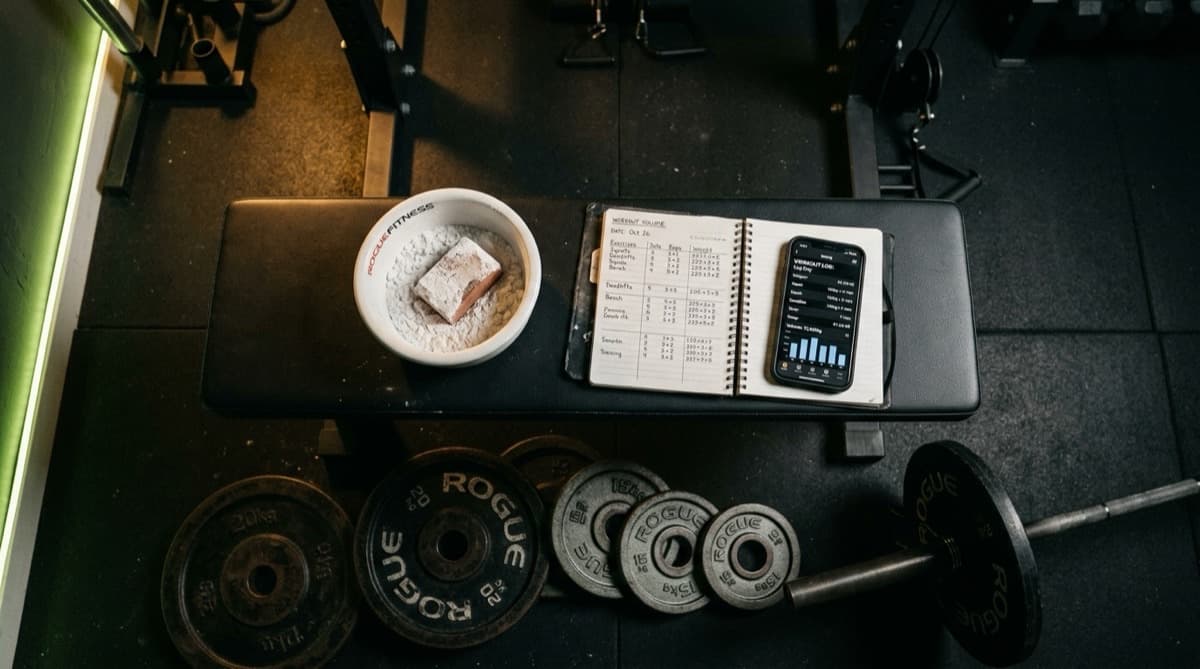
Reps and sets are dials, not rules. Low reps and heavy weight lean strength; moderate reps build muscle; high reps build endurance; and taking sets close to failure matters more than hitting a perfect number. Pick a range that fits your goal, then progress it session after session. The only non-negotiable is knowing what you did last time, whether that lives in a notebook or an app like BeatLast, so today's target is always one glance away.
Frequently asked questions
- What is the difference between reps and sets?
- A rep (repetition) is one complete movement of an exercise — one squat down and up, one press to lockout. A set is a group of reps performed together before resting. When you see 3×8, it means three sets of eight reps with rest in between.
- How many reps should I do for strength?
- For maximal strength, most lifters train in the 1–5 rep range with heavier loads and longer rests of three to five minutes between sets. Classic strength programs like 5×5 sit at the low end of this range.
- How many reps build the most muscle?
- The 6–12 rep range is the reliable default for building muscle. It balances enough load to challenge the muscle with enough reps to rack up volume. However, muscle growth is fairly forgiving of rep range as long as you take sets close to failure.
- How many sets should I do per exercise?
- A common starting point is 3–4 working sets per exercise, with roughly 10–20 hard sets per muscle group per week for growth. Start at the lower end and add sets only when progress stalls.